Research
We develop computational methods — finite element simulation, scientific machine learning, and uncertainty quantification — and apply them to the mechanics of the human body. The aim is patient-specific modelling that is accurate enough to trust and fast enough to use.
Research areas
Cardiovascular biomechanics
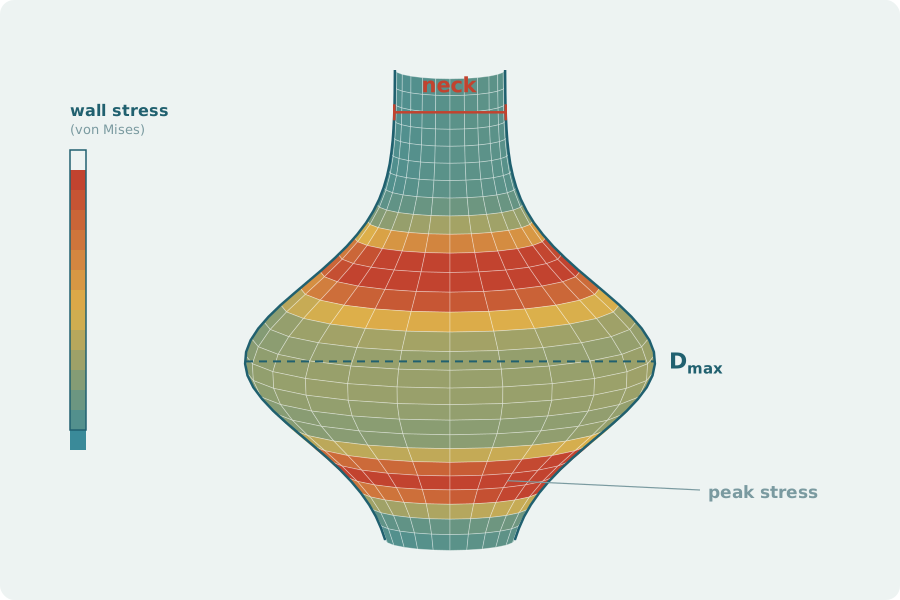
We build patient-specific models of the aorta and carotid arteries to understand how geometry, wall mechanics, and blood flow drive disease. For abdominal aortic aneurysms we use virtual patient populations to re-assess rupture risk from neck geometry and shape compactness, rather than maximum diameter alone.
Virtual population to re-assess AAA risk → Carotid haemodynamics and cardiovascular events →
Ocular biomechanics
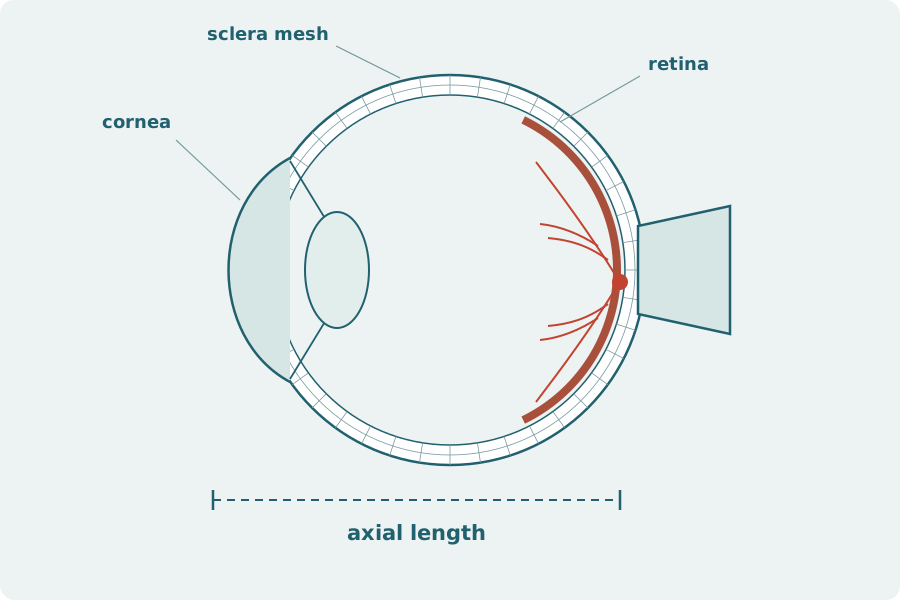
We model the mechanics of ocular tissue and study how the geometry of the eye affects the interpretation of clinical images — showing, for example, that axial length introduces scaling effects that bias retinal fundus image analysis.
Soft tissue mechanics
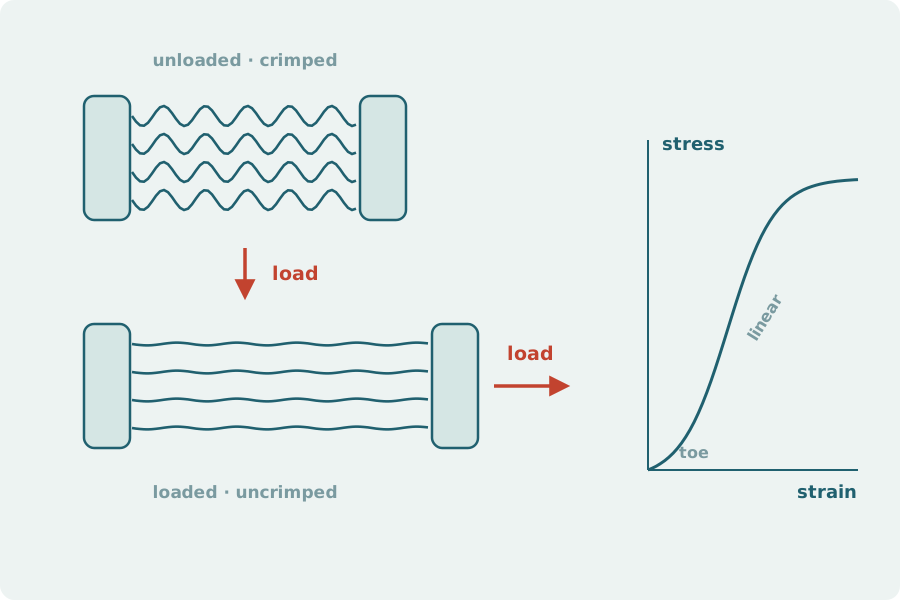
Tendons and soft connective tissues are anisotropic, viscoelastic, and routinely undergo large deformation. We develop finite element formulations that capture fibre-level constitutive behaviour, contact, and damage — validated against the Achilles tendon.
A finite element for soft tissue deformation → Deformation analysis of the Achilles tendon →
Approach & tools
Finite element simulation
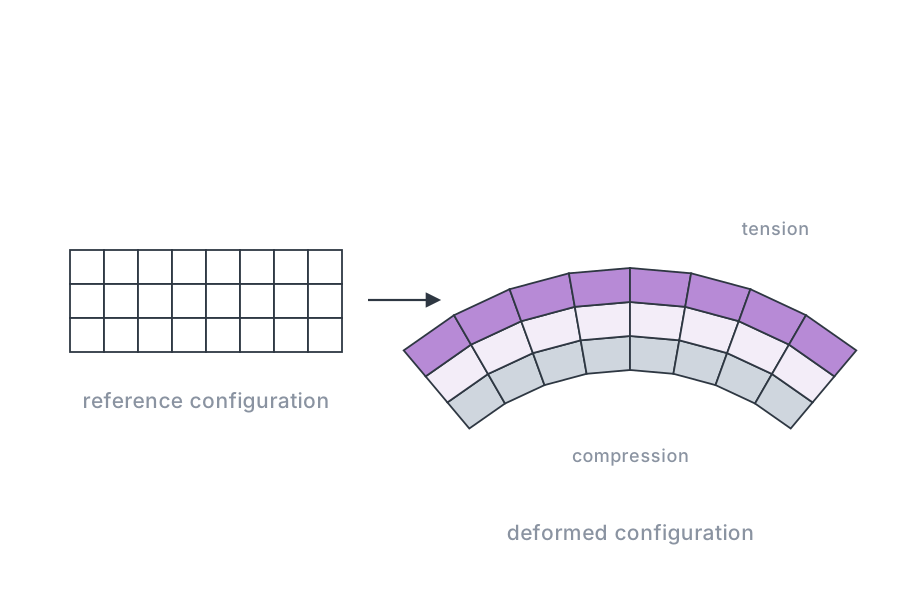
Our simulation work builds on the Absolute Nodal Coordinate Formulation, which handles the large rotations and deformations biological tissue undergoes without the locking pathologies of conventional elements. We develop the element technology, contact descriptions, and locking-alleviation techniques that make these models usable.
Alleviation techniques for volumetric locking → Contact for continuum beams with deformable cross-section →
Scientific machine learning
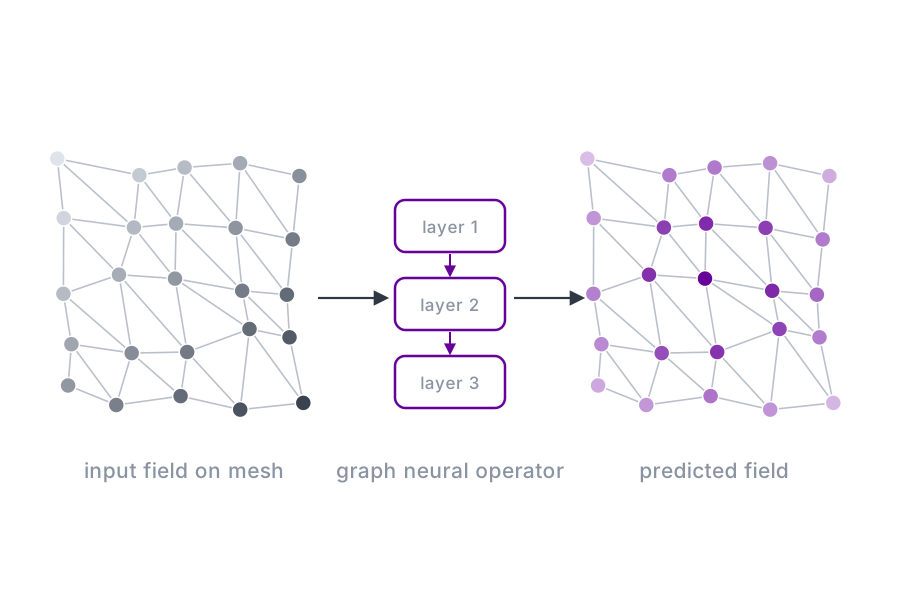
High-fidelity simulation is too slow for design, optimisation, and bedside decision-making. We develop graph neural operators and physics-informed surrogates that learn the underlying mechanics, handle unstructured meshes and irregular geometry, and replace repeated expensive solves.
Graph neural operators for ill-posed problems → Learning mesh-free discrete differential operators →
Uncertainty quantification
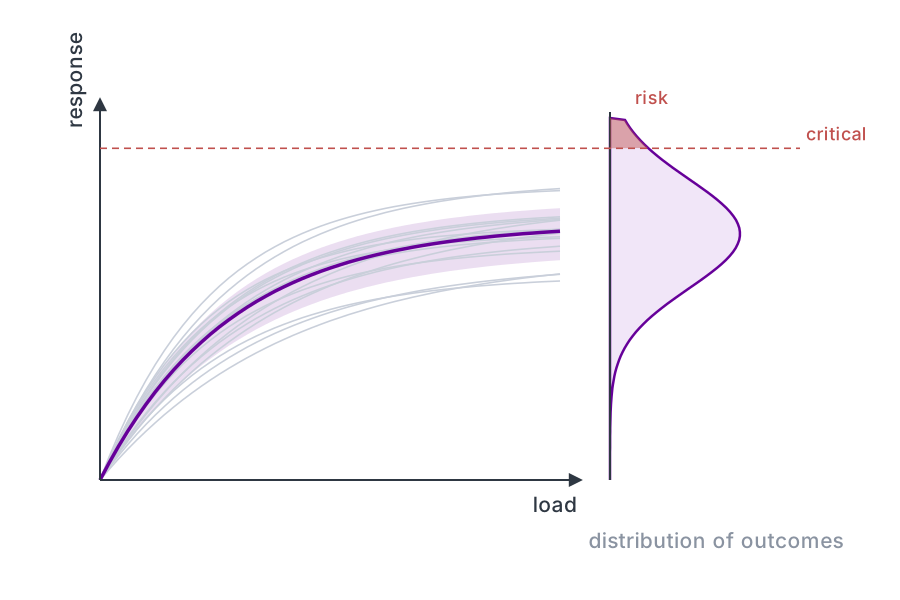
Patient geometry, material properties, and loading are all uncertain, and small changes can produce large differences in predicted response. We build UQ frameworks and virtual populations that characterise this variability statistically, so predictions carry a defensible measure of confidence rather than a single number.
Funding & partners





Peripheral work
The methods we develop are not specific to biology. Surrogate modelling, contact mechanics, and uncertainty quantification transfer readily to engineering structures, and we keep a small thread of work on deployable space structures alongside the main programme.